
The short answer: Oracle licenses its software in six main ways. A Full Use licence has no restriction on how you use the program. An Application Specific Full Use (ASFU) licence gives full use, but only with the one application it was sold with. An Embedded Software License (ESL) is narrower again: the Oracle program is built into an application and the customer cannot touch it. The other three are restricted use licences, proprietary application hosting, and licences included with other Oracle products. The type decides what you may do, and who is responsible for compliance.
It is good to know these six models when you buy Oracle licences, and when you check what an application vendor has sold you.
The six Oracle licensing models at a glance
| Licence type | What you may do | Who carries compliance |
|---|---|---|
| Full Use (FU) | Use the program fully, for any number of applications | The customer |
| Application Specific Full Use (ASFU) | Use the program fully, but only with the named application | The customer |
| Embedded Software License (ESL) | Run the application; no direct access to the Oracle program | The application vendor (ISV) |
| Restricted use | Whatever the negotiated restriction allows | The customer |
| Proprietary application hosting | The ISV hosts its own application for its customers | The ISV |
| Included with another Oracle product | Use only as the main product needs, within its limits | The customer |
Full Use (FU)
A full use licence has no restrictions on:
- using the full functionality of the licensed program;
- using the technology products as the underlying infrastructure for several applications.
Note: one very big mistake I have seen with customers is believing that a full use licence of the database gives them the right to use the options and management packs. It does not. A full use database licence lets you use the database’s permitted features, as Oracle’s licensing documents explain. The options and management packs are, with some exceptions, licensed at extra cost. See the prices in our guide to the Oracle technology price list, and how to disable Oracle options and packs you have not bought.
Application Specific Full Use (ASFU)
An Application Specific Full Use (ASFU) licence is:
- a full use licence, without restrictions on using the program’s complete functionality;
- restricted to use with the specific application it is licensed for.
It is usually provided through independent software vendors (ISVs) who build their applications on Oracle software. ISVs are given the right to sub-license the Oracle software to their customers.
The responsibility for compliance stays with the end user. If the database is used for anything other than that application, a full use licence is needed.
Embedded Software License (ESL)
An Embedded Software License (ESL) is:
- an application specific licence with further restrictions;
- a licence where the end user has no access to the licensed Oracle program.
ISVs who build applications on Oracle technology distribute the Oracle program inside the application. The end user cannot install, configure or tune the Oracle program; only the ISV can.
The responsibility for compliance is with the ISV.
Restricted use licences
Restricted use licences can carry many kinds of restriction: use with one application, hosting a specific application, use on specific servers, or use by a specific class of users or employees. There is practically no limit to the possible restrictions; they depend on the negotiation between the customer and Oracle. Two common types follow.
Proprietary application hosting
A proprietary application hosting licence is an application specific licence for ISVs who have built an application on Oracle Database or middleware and want to offer it to their customers as a hosted service.
This kind of licence can have further restrictions, especially on limiting access to the specific application and on not installing it on the end user’s premises.
Note: many blogs describe two types of hosting licence, proprietary and generic. In the documents currently on Oracle’s websites, only proprietary hosting is discussed and described.
Licences included with Oracle products
E-Business Suite and many other Oracle applications depend on other Oracle products. Oracle supplies those products with the application, with restrictions on functionality or on the extent of use.
One of the most common compliance issues is the restricted use licence of Oracle Database and WebLogic supplied with E-Business Suite. Its use depends on the customer not making customisations. If modifications are made, you need full use licences of those programs.
Other models
These six Oracle licensing models are the most common. Oracle also has a few models that are very rare and contracted for specific purposes. For the metrics each licence is counted by, see Oracle license metrics.
Questions we are asked about Oracle licence types
What is an Oracle ESL licence?
An Embedded Software License: the Oracle program comes built into an ISV’s application, and the customer has no access to the Oracle program itself. The ISV carries the compliance responsibility.
What is the difference between ASFU and ESL?
Both are tied to one application. With ASFU the customer can use the Oracle program fully with that application, and is responsible for compliance. With ESL the customer cannot access the Oracle program at all, and the ISV is responsible.
Can an ASFU database be used for other applications?
No. Using it for anything other than the named application needs full use licences.
We provide one-time licence assessments as well as annual or bi-annual assessment services. Read more about our Managing Partner, Sheshagiri Anegondi, who worked at Oracle from 1998 to 2015 and wrote the book Licensing Oracle. For how the metrics, editions and support fit together, read Oracle licensing explained. Java is another widely audited Oracle product; see Oracle Java licensing changes and the alternatives.
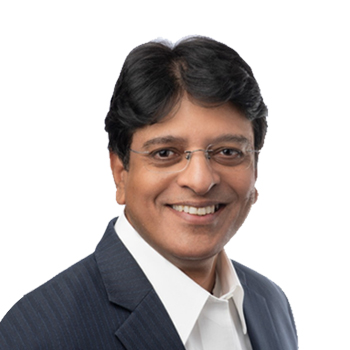
Sheshagiri Anegondi
Managing Partner of Rythium Technologies. Seventeen years at Oracle, from 1998 to 2015, in leadership roles including Vice President Sales, after Compaq and Digital Equipment Corporation.
Author of “Licensing Oracle: The Reference Manual for Managing Oracle License Compliance & Procuring Oracle Software, Hardware, Cloud & Services” (2021, ISBN 10: 1639046887).
See more of our analysis in Google: add Rythium as a preferred source