
Is your Oracle Fusion Cloud bill growing faster than your business? We find the users, roles, modules and contract terms that are inflating your subscription, fix them, and negotiate a renewal that reflects what you actually use.
Unmanaged subscription costWith Rythium
Where Rythium steps in1Consumption baseline2Role right-sizing3Contract analysis4Renewal negotiation
Moving to Oracle Cloud removes the server audits of the on-premise world, but it does not remove the compliance question. It moves it. In Fusion Cloud, what you pay for is decided by who is authorized to do what inside the application, and Oracle can see that data directly.
Every Fusion service is sold on a metric written into your ordering document. The ones that drive most of the cost are:
Hosted Named UserEach individual authorized to access a cloud service needs a subscription, whether they log in every day or have not logged in for a year. Authorization, not activity, is what counts.
Hosted EmployeePriced on your total workforce, and the definition can extend to contractors, agents and consultants who use or are tracked by the service. Cheap per unit, expensive when only a fraction of the workforce actually uses the module.
Application User, Each and volume metricsIntegration and system accounts, additional test environments, records, transactions, expenses or spend processed. These are often loosely defined, and loose definitions tend to be read in the vendor’s favor at renewal.
In Fusion, a user’s subscription requirement is derived from the privileges inside the roles assigned to them. One over-broad role can make a user count against several cloud services at once, including services you never bought. Oracle’s own security documentation warns that assigning predefined roles as delivered can consume subscriptions even where no subscription was purchased, and that privileges which are assigned but never used still count. The Employee, Contingent Worker and Application Implementation Consultant roles are among the most common culprits.
Where the cost hides
That is why SaaS optimization cannot be done from the contract alone, or from the user list alone. The answer sits in the link between the two.
Authorization, not activity, is what Oracle counts.
Fusion bills rarely jump because of one bad decision. They creep, through choices made during implementation that nobody revisits, and through contract terms that quietly reset the price at every renewal. These are the leaks we find most often:
Roles copied as deliveredImplementation partners assign Oracle’s predefined roles to get users live quickly. Those roles carry privileges that trigger services far beyond the user’s job.
Users who should have been end-datedLeavers, transferred staff and seasonal users stay authorized long after they stop working in the system. Under Hosted Named User, every one of them is paid for.
Implementation and support accountsConsultant, super-user and generic accounts created for go-live are never cleaned up. A single shared account can create a subscription requirement for every individual using it.
The wrong metric for the moduleAn employee-based metric on a module used by a few hundred specialists, or a named-user metric on a self-service module the whole workforce touches.
Shelfware bought at signingModules and quantities sized on the implementation business case, or on a ramp that assumed growth that never arrived, renewing year after year with little or no adoption.
Extra environments and add-onsAdditional test environments, analytics, integration and storage add-ons bought for the project and still billing after the project ended.
Renewal mechanicsFirst-term discounts that expire, uncapped renewal uplifts, auto-renewal notice windows that pass unnoticed, and misaligned end dates that fragment your leverage.
Repackaging pressureProposals to move from a la carte services to a suite or a new bundle, positioned as a better deal but anchored close to list price. Bundled AI capabilities are increasingly used to justify a higher renewal number.
A global engineering and consulting group with more than 30,000 employees was paying for more Fusion ERP and HCM subscriptions than it used, on discounts well below global benchmarks. By resizing quantities to actual consumption, consolidating four overlapping ERP services into one, and benchmarking every discount, we identified a path from £24.1M to £17.4M: a reduction of about 28%.
A reduction of about 28%
The best time is long before Oracle sends a renewal quote. Your leverage is highest when you know your real consumption and still have time to act on it. Typical trigger points:
Your leverage is highest when you know your real consumption and still have time to act on it.
Most firms in this market do one half of the job. Security and SoD specialists clean up roles but do not negotiate with Oracle. Negotiation advisors work the commercial terms but never look inside your Fusion pod. We do both, and we connect them: every role change is priced, and every pricing argument is backed by consumption evidence Oracle cannot dispute.
Using read-only reports, we extract your users, role assignments, privileges, login activity and environment inventory. We map every assignment to the cloud services it triggers, using Oracle’s own metric definitions and subscription-impact role data, and compare the result with your ordering documents. You see, service by service, what you own, what you consume and why.
We design lean custom roles that give people exactly what their job needs, identify users to end-date or downgrade, and remove implementation and generic accounts. Changes are sequenced with your Fusion security team so segregation-of-duties controls are preserved and nothing breaks in production.
We read your Cloud Services Agreement, ordering documents, service descriptions and any amendments to establish your rights: metric definitions, rebalancing or swap rights, reduction and termination terms, renewal and uplift provisions, co-terming options and notice periods. We model alternative metrics and bundles over a three to five year horizon.
We build the lowest defensible bill of materials, benchmark your pricing against comparable deals, and run the renewal: timing, executive messaging, competitive alternatives and the term sheet. Where you prefer, we handle all communication with Oracle on your behalf.
We know how the other side worksRythium is led by a former Oracle Vice-President. We know how Oracle Cloud sales teams are targeted and paid, how renewal quotes are built, and where the flexibility really sits.
Strictly independentWe take no fees, commissions or resale margin from Oracle or any of its partners. We have nothing to sell you except the advice.
Evidence first, then negotiationWe do not walk into a renewal with opinions. We walk in with a consumption position reconciled to Oracle’s own definitions.
The whole Oracle estate in one viewMany SaaS customers still run Oracle Database, middleware or E-Business Suite on-premise or on OCI. We look at the full relationship, so a concession in one area is not paid for in another.
Savings that lastWe leave behind role design standards, a joiner-mover-leaver checklist and a consumption dashboard so spend does not quietly rebuild before the next renewal.
Every role change is priced, and every pricing argument is backed by consumption evidence.
Oracle SaaS is not one product. Fusion alone is a family of cloud services, each with its own metrics, minimums and add-ons, and Oracle’s industry clouds for healthcare and utilities are priced on entirely different models. We cover:
Most Oracle Health customers still run on agreements written by Cerner, before Oracle owned it. These are typically priced on organizational measures such as revenue, beds, facilities or encounters rather than users, and bundle software, hosting and services in a single commercial structure. As Oracle moves hospitals to its next-generation EHR on OCI and introduces new AI capabilities, each transition is a re-pricing event. We read the legacy Cerner paper alongside Oracle’s new terms, separate what you already own from what is genuinely new, and make sure growth in your organizational measures is not over-counted.
Utilities cloud services are usually priced on customers, meters or service points rather than named users, and quantities are set at signing against growth and smart-meter rollout assumptions that may not materialize. Many utilities are also moving from on-premise Customer Care and Billing or Meter Data Management to the cloud versions. We check your counted quantities against the contract definitions, model the migration so you do not pay support and subscription for the same capability, and negotiate tiers that track your actual growth.
Yes, in effect. Oracle hosts the service, so it can see your user counts, role assignments and usage without running a single script. Instead of a formal audit, the finding usually surfaces as a notice of usage above your subscribed quantities, or as a “true-up” line in your renewal quote.
The first step is the same as with any audit: establish your own position before you accept Oracle’s.
Usually not. For most named-user services Oracle counts users who are authorized, not users who are active. Someone with a role that grants a privilege counts against that service, even if they never use it. Inactive accounts and over-broad roles are the most common source of overspend we find.
Generally, Oracle SaaS commitments cannot be reduced mid-term. What you can often do is rebalance or swap quantities between services, if your ordering document allows it, and reduce at renewal. That is why the optimization work needs to be finished well before the renewal date, not during it.
Ideally nine to twelve months out. The consumption baseline and role clean-up take time, auto-renewal and notice windows can close earlier than you think, and Oracle’s negotiating flexibility depends heavily on its own quarter and year-end calendar.
Not necessarily. A renewal increase typically comes from three places: list price movement, discounts from the first term that expire, and growth in your counted users. Only the last reflects value you are receiving, and it is often overstated by roles and inactive accounts. Whether you are protected depends on what your ordering document says about renewal pricing, which is why we start with the contract.
Sometimes it makes sense; often it does not. Suites can simplify administration, but they are frequently priced close to list and include capabilities you may never deploy. We model the bundle against your actual consumption over three to five years before you decide.
Not if it is done properly. We work alongside your Fusion security team, test custom roles in a non-production environment, and check every change against segregation-of-duties rules before it reaches production. Most users notice nothing, because they lose only access they never used.
No. We work from read-only reports that your team runs, or from a read-only account. Your data stays under your control throughout.
Yes, and this is the most valuable time to engage. The first Fusion order sets your metrics, quantities, unit prices and renewal terms for years. We also look at how your existing on-premise support spend is treated in the transition, so you do not pay twice during the migration period. See also our E-Business Suite License Review.
Oracle is embedding AI features and agents across Fusion, and AI is increasingly used to justify a higher renewal figure. We separate what is included in your existing subscription from what is genuinely additional, and assess whether the additional elements have a business case. See also our Embedded-AI Review.
Yes, though the levers differ from Fusion. Oracle Health costs are driven by organizational measures, hosting and services more than by user roles. The biggest savings usually come from the contract: how your original Cerner agreement is carried into Oracle’s new terms, how growth in measures such as beds or revenue is counted, and what a move to OCI-hosted EHR should and should not cost you.
Utilities subscriptions are typically counted on customers, meters or service points. We validate those counts against the contract definitions, check that inactive, disconnected or duplicate premises are not inflating them, and negotiate volume tiers and renewal terms that follow your real growth rather than the projections used when you signed.
Depending on the engagement, we work on a fixed fee or a fee linked to the savings we deliver. We size the opportunity before you commit, so the business case is clear from the start.
We document the final entitlement, hand over role design standards and a joiner-mover-leaver process, and set up a consumption check you can run each quarter. If you prefer, we run it for you as part of our Managed SAM service, so the next renewal starts from a clean position.
Tell us what is on your desk: a renewal date, a quote, a usage notice or a suite proposal. A senior advisor replies within 48 hours.
Request a confidential conversation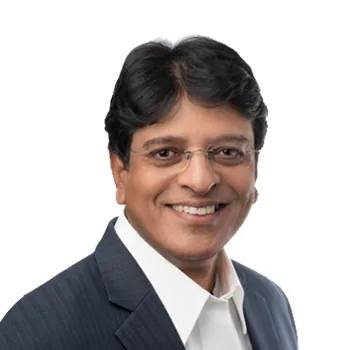
At Oracle from 1998 to 2015, in leadership roles including Vice President Sales, and before that at Compaq and DEC. Amongst the foremost Oracle license experts globally.
Cookies on rythium.com
We use essential cookies to make this site work, and additional cookies to measure visits and our ads. You can reject the additional ones or choose which to keep. Privacy Policy