
Most Oracle customers spend more on support than they ever spent on licences. The arithmetic is simple. Annual support is 22% of the net licence fee, so by the fifth year the support you have paid exceeds the price of the licence, and the bill keeps coming for as long as the software runs.
The obvious fix, dropping support on licences you no longer use, often saves nothing. Oracle’s support policies are written so that it does not. This article explains how Oracle prices support, why partial terminations backfire, and the options that do reduce the bill.
What Oracle support costs
Software Update License & Support is priced at 22% of the net licence fee per year. On the Oracle Technology Global Price List of 15 September 2026, Database Enterprise Edition is $47,500 per processor and its support is $10,450 per processor per year. If you negotiated a 50% discount on the licence, your support starts at 22% of the discounted price.
Then it rises. Support renewals carry annual adjustments, and over a decade those adjustments compound. A useful exercise is to put your renewal quotes from the last three years side by side. Most finance teams have never done it, and most are surprised.
| Example: 16 processor licences of Database Enterprise Edition at list | Amount |
|---|---|
| Licence fee (one-time) | $760,000 |
| Support, first year | $167,200 |
| Support over five years (does not include the increase per year due to the inflationary index) | $836,000 |
Why you cannot simply drop what you do not use
Three rules in Oracle’s Software Technical Support Policies (October 2026) decide what a reduction is worth.
The licence set
A licence set is all of your licences of a program, together with its options and management packs. Database Enterprise Edition, Partitioning and the Diagnostics Pack are one licence set.
Matching service levels
The policy says all licences in a licence set must be supported at the same level, and that “you may not support a subset of licenses within a license set”. To stop paying for part of a set, you terminate those licences outright, by letter. You do not keep them unsupported.
Repricing after a reduction
This is the rule that surprises people. When a subset of the licences on a single order is terminated, support for the remaining licences on that order is repriced at Oracle’s list price for support, minus the standard discount. The policy caps the new price at what you were already paying, and it never falls below what you paid for the licences you keep.
In practice, terminating 4 of 16 licences on a heavily discounted order can leave the support bill where it was. The discount that made the order attractive disappears from the licences that remain.
Letting support lapse costs more later
Some companies let support lapse on stable systems and plan to come back when they need an upgrade. Oracle’s reinstatement fee is 150% of the last annual support fee, prorated over the lapsed period, and you pay the support fee for the new period on top. Two years without support can cost more than three years with it. If you stop paying Oracle, plan on not coming back.
What does reduce the bill
Terminate whole orders or whole licence sets
Repricing applies to the licences left on an order. When everything on an order is unused, or a whole product is retired, terminating all of it removes the support with nothing left to reprice. This needs an accurate picture of what is installed, because a terminated licence that is still deployed is a compliance finding.
Model the renewal before you send a letter
Oracle support is renewed per Customer Support Identifier, and the way licences are spread across orders and CSIs decides what any change will cost. We model each option against the repricing rule before anything goes to Oracle. Our guide to Oracle CSI numbers explains why the structure matters.
Move to the right edition
Many Enterprise Edition databases use no Enterprise Edition features. Standard Edition 2 is $17,500 per processor at list against $47,500, with support at the same 22%, and it counts per occupied socket rather than per core. The move needs a check of the features and options actually in use, because Enterprise Edition installs with most of them enabled. Our article on disabling Oracle options and packs covers that check.
Third-party support for stable systems
Most Oracle licences are perpetual. You can stop Oracle support and buy support from an independent provider, and your right to use the versions you have stays. Independent providers usually quote well below Oracle’s fee. What you give up is access to Oracle’s new versions and patches, so it suits systems that will not be upgraded. Read more on our Oracle third-party support page.
Negotiate when Oracle wants something
Support fees move most when Oracle has a reason to move them: a cloud commitment, a ULA renewal, a large new purchase. Those are the moments to put your support base on the table, with the numbers already modelled. Our Oracle pricing negotiation work starts there.
Questions we are asked about Oracle support costs
How much does Oracle support cost per year?
22% of the net licence fee, plus the annual adjustments applied at each renewal. For Database Enterprise Edition at list price, that is $10,450 per processor licence per year.
Can I cancel Oracle support for some of my licences?
Only by terminating those licences, because all licences in a licence set must be supported at the same level. If other licences remain on the same order, their support is repriced, which can cancel out the saving.
What happens if Oracle support lapses?
To return, you pay a reinstatement fee of 150% of the last annual support fee, prorated over the time support lapsed, plus the support fee for the new period.
Is third-party support for Oracle allowed?
Yes. Your perpetual licences remain valid when you leave Oracle support. You lose access to Oracle’s updates, new versions and support portal for those products.
Support is usually the largest Oracle line in the IT budget and the least examined. If you want your renewal modelled before the next quote arrives, book an hour with our Advisor on Call or talk to us.
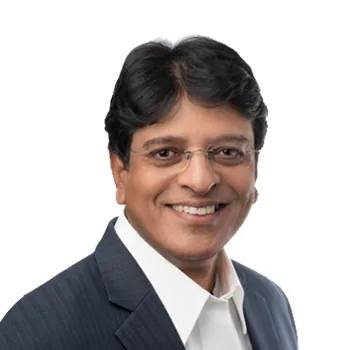
Sheshagiri Anegondi
Managing Partner of Rythium Technologies. Seventeen years at Oracle, from 1998 to 2015, in leadership roles including Vice President Sales, after Compaq and Digital Equipment Corporation.
Author of “Licensing Oracle: The Reference Manual for Managing Oracle License Compliance & Procuring Oracle Software, Hardware, Cloud & Services” (Notion Press, 2021) (ISBN 10: 1639046887).
See more of our analysis in Google: add Rythium as a preferred source