
The short answer: The Oracle Java SE Universal Subscription is the product Oracle sells for commercial use of Oracle Java SE. It replaced the Java SE Subscription and Java SE Desktop Subscription on 23 January 2023, is priced on your total employee count whether or not each person uses Java, and runs for at least one year.
In short
- Since 23 January 2023 Oracle sells commercial Java SE as the Universal Subscription, priced per employee for the whole organization (Oracle’s Java SE Universal Subscription FAQ, read 20 November 2026).
- Every full-time, part-time and temporary employee counts, and so do the staff of agents, contractors, outsourcers and consultants who support your internal operations, whether or not they use Java (Oracle price list, 8 October 2026).
- One subscription covers desktops, servers and third-party clouds, up to a processor limit set by your employee band.
- The minimum term is one year. If you do not renew, your right to use the programs ends and you must uninstall them.
- You do not need it for Oracle JDK 25 under Oracle’s no-fee terms (updates through September 2028), for OpenJDK builds, or for Java used only with another Oracle product you have licensed.
What is the Oracle Java SE Universal Subscription?
The Oracle Java SE Universal Subscription is a license and support subscription for Oracle Java SE. It gives you the right to run Oracle JDK in production on desktops, servers and cloud, with Oracle Premier Support. Oracle introduced it on 23 January 2023 to replace two older products.
The legacy Java SE Subscription was priced per processor, at US$25 a processor a month for up to 99 processors, and the legacy Java SE Desktop Subscription per named user, at US$2.50 a user a month for up to 999 users, both falling with volume (Oracle’s Java SE Subscription price list of 3 August 2018).
Under the old products you paid for the servers or the people that used Java. Under the Universal Subscription the only input is the size of your organization, so a company with Oracle Java on one server and a company with Oracle Java on every laptop pay the same price if they employ the same number of people.
The rule, in Oracle’s words
Oracle’s price list of 8 October 2026 defines the metric. An “Employee for Java SE Universal Subscription” is “(i) all of Your full-time, part-time, temporary employees, and (ii) all of the full-time employees, part-time employees and temporary employees of Your agents, contractors, outsourcers, and consultants that support Your internal business operations.”
The next sentence settles the question we hear most: “The number of Employees is determined without regard to the number of Employees that use the Programs.” The count is fixed at the start, because the licensed quantity “must, at a minimum, equal the number of Employees as of the effective date of Your order.”
It does not stay fixed. If your employee count rises above the licensed number during the term, or you exceed the processor limit for your band, Oracle’s terms say you must buy an additional license. A company that hires or takes on a large outsourcing contract mid-term can owe more before the renewal date arrives.
Who counts as an employee for the Java SE Universal Subscription?
Everyone on your payroll counts, and the definition then reaches beyond it. Full-time, part-time and temporary employees are all included, because the definition begins with “all of Your” employees.
The second part of the definition adds the full-time, part-time and temporary staff of your agents, contractors, outsourcers and consultants, as long as they support your internal business operations.
In a company with offshore delivery partners and a large contract workforce, that clause can take the count well above the headcount HR reports, which is why the first number to agree in any Java discussion is the employee count itself. Use of Java plays no part.
A finance clerk who has never opened a Java application counts the same as a developer who writes Java all day. Oracle’s own example on the price list shows the effect: a company with 23,000 employees and 5,000 agents, contractors and consultants is priced on 28,000. The table sets out how each group is treated under the definition.
| Group | Counted under the employee metric? |
|---|---|
| Full-time, part-time and temporary employees | Yes, all of them |
| Staff of agents, contractors, outsourcers and consultants who support your internal business operations | Yes, including their full-time, part-time and temporary staff |
| Employees who never use Java | Yes: the count is “without regard to the number of Employees that use the Programs” |
| Growth during the term | If employees exceed the licensed number, an additional license is required |
How many processors does the Java SE Universal Subscription allow?
The employee count sets the price, and it also caps how far Oracle Java can spread. Each band on the price list of 8 October 2026 carries a processor limit, and the limit excludes desktops and laptops, so it applies to servers and cloud capacity.
Up to 10 employees you may run the programs on up to 1,000 processors, up to 100 employees on 10,000, up to 500 employees on 20,000, and from 501 employees on 50,000. Above the limit you contact Oracle for pricing.
Processors are counted the same way as for Oracle’s other processor-licensed products: total cores multiplied by the factor in Oracle’s Processor Core Factor Table, rounded up. One case is worth checking before you buy.
A small company that runs Java heavily on a large server estate or a big cloud cluster can pass its band’s limit long before it passes the employee count, and the price list then sends it to Oracle sales.
| Licensed employees | Processor limit (desktops and laptops excluded) |
|---|---|
| 1 to 10 | 1,000 processors |
| 11 to 100 | 10,000 processors |
| 101 to 500 | 20,000 processors |
| 501 to 2,999 | 50,000 processors |
| 3,000 and above | 50,000 processors |
What does the Java SE Universal Subscription include?
The subscription is more than a license, and Oracle sells it on what comes with it (Java SE Universal Subscription data sheet, September 2026).
You get commercial use of Oracle JDK on desktops, servers and third-party clouds, and updates for every supported Oracle JDK version, including Java 8, 11, 17 and 21, through quarterly Critical Patch Updates and, when Oracle needs them, monthly Critical Security Patch Updates. Premier Support runs 24 hours a day through My Oracle Support.
Oracle also offers triage support across your whole Java portfolio, including third-party libraries and runtimes, and works with those vendors where commercially reasonable.
The tools include Java Management Service, an Oracle Cloud Infrastructure service that inventories Oracle and non-Oracle Java across servers, desktops and cloud; the Enterprise Performance Pack, which brings JDK 17 performance to Java 8 workloads; JDK Mission Control and Flight Recorder; and the Java Verified Portfolio of supported libraries such as Helidon and JavaFX.
How much does the Java SE Universal Subscription cost?
On Oracle’s price list of 8 October 2026, smaller organizations pay a flat yearly price by band: US$100 a year for up to 10 employees, US$1,000 for up to 100 and US$10,000 for up to 500. From 501 to 2,999 employees the price is US$10,000 a year plus US$147.20 for each employee above 500.
These small business prices apply only when you buy directly from Oracle; resellers cannot offer them. Organizations with 500 or fewer employees can buy through the Oracle Store, and larger ones go through Oracle sales.
From 3,000 employees the price is per employee per month: US$10.50, falling in bands to US$8.25, US$6.75, US$5.70 and US$5.25 for 40,000 to 49,999 employees, with 50,000 or more priced by Oracle on request. At 3,000 employees that is US$378,000 a year.
The full price list, worked examples and the ways to pay less are in our guide to Java license cost.
What happens if you do not renew the Java SE Universal Subscription?
The subscription is the license, so ending it ends your right to use what it covered. Oracle’s price list says that if you choose not to renew, your right to use the Java SE Universal Subscription programs “will terminate and You must de-install” them.
Renewal is at “the then current fees”, so the price you pay in year two is whatever the price list says at that point, not what you paid in year one.
Oracle’s own FAQ advises customers who will not renew to move their applications to Oracle’s OpenJDK builds, which are under the GPL, before the subscription ends, so that the applications keep running. Older contracts have their own rules.
Customers of the legacy Java SE Subscription may renew it to the extent their existing order allows, subject to Oracle’s confirmation that current usage matches the license counts in that order. Java SE Advanced, Java SE Advanced Desktop and Java SE Suite licenses continue as before.
When do you not need the Java SE Universal Subscription?
Several kinds of Java use are free under Oracle’s own terms (Oracle JDK licensing FAQ and Java SE support roadmap, both read 20 November 2026). Oracle JDK 25 is under the Oracle No-Fee Terms and Conditions for all users, including production, for releases through September 2028.
Oracle JDK 8, 11, 17 and 21 updates are now under the OTN license: free for personal use, development, testing, prototyping and demonstrating, but not for production. For Java 21 that applies from update 21.0.13, released on 20 October 2026.
OpenJDK builds are under the GPL with the Classpath Exception and carry no Oracle license fee. If you have current support for an Oracle product that includes Java, you may use Oracle JDK with that product, and Oracle Cloud Infrastructure customers are entitled to Oracle Java under their cloud service terms.
Our guide to whether Java is free covers each version, and approved product use in Oracle Java covers the product rights.
Worked examples
| Organization | Price list band | Annual price at list |
|---|---|---|
| 800 employees (Oracle’s example) | US$10,000 for the first 500, plus 300 at US$147.20 | US$54,160 |
| 3,000 employees (Oracle’s example) | 3,000 x US$10.50 x 12 months | US$378,000 |
| 23,000 employees and 5,000 contractor staff (Oracle’s example) | 28,000 x US$6.75 x 12 months | US$2,268,000 |
A list price is where the conversation starts. One of our clients, a manufacturer with 8,000 employees, received Oracle’s quote on the employee metric for US$1,010,000 a year. A scan found Oracle JDK on 61 servers supporting three applications.
The rest of the estate, 92%, moved to OpenJDK builds, and we negotiated a subscription for what remained at US$140,000 a year, ten weeks after Oracle’s first letter and with no audit. The full story is in our Oracle Java case study.
Mistakes we find with the Java SE Universal Subscription
- Counting Java users. Internal estimates often start from the people or servers that use Java. Oracle’s position is that one machine running commercial Oracle Java means you pay for every employee, so the estimate has to start from the headcount.
- Leaving out contractors. The staff of outsourcers and consultants who support your internal operations are in the definition. A count taken from HR alone is short.
- Trusting an internal Java count. Java hides. Developers install it, applications bundle it, middleware copies it onto servers and desktop images carry it along. Internal counts usually miss bundled copies and old versions, and they rarely separate Oracle JDK from OpenJDK builds that look the same.
- Answering Oracle before a baseline. Do not confirm headcounts, deployment scope or compliance status before you have run your own baseline. Acknowledge the letter, ask what Oracle is requesting and take independent advice before any data goes back.
- Assuming containers or cloud change the price. Oracle’s FAQ says the application architecture and deployment model do not affect pricing. Docker, Kubernetes and cloud are priced on the same employee count.
How Rythium helps
Our Java license review finds every Java installation in your company, classifies each one as Oracle JDK or an OpenJDK build, matches it against your Oracle contracts and gives you the position before Oracle asks for it. Most of our clients pay Oracle nothing for Java after the review. We are independent: we take no fees, commissions or partnerships from Oracle or any other software vendor.
Questions we are asked about the Java SE Universal Subscription
Is Oracle Java SE free?
Partly. Oracle JDK 25 is free for all users, including production, under Oracle’s no-fee terms for releases through September 2028. Current updates of Oracle JDK 8, 11, 17 and 21 are free only for personal use, development and testing; production use needs the Java SE Universal Subscription. OpenJDK builds are free under the GPL.
Is the Java SE Universal Subscription priced per user or per processor?
Neither. It is priced per employee, counting your whole organization and the staff of contractors who support your internal operations. Processors only matter as a ceiling: each employee band allows a maximum number of processors, desktops and laptops excluded.
Does the Java SE Universal Subscription cover Docker, Kubernetes and cloud?
Yes. Oracle’s FAQ says the subscription covers desktops, servers and third-party clouds, and that the underlying application architecture and deployment model do not affect pricing.
Can we buy the Java SE Universal Subscription online?
Organizations with 500 or fewer employees can buy it through the Oracle Store. Organizations with 501 or more employees buy through Oracle sales. The small business prices up to 2,999 employees are available only when you buy directly from Oracle.
What happens to our old Java SE Subscription?
Oracle’s FAQ says customers of the legacy Java SE Subscription may renew it to the extent their existing order allows, subject to confirmation that current usage matches the license counts in that order. Check the ordering document before the renewal date.
Do contractors count for the Java SE Universal Subscription?
Yes, if they support your internal business operations. Oracle’s definition includes the full-time, part-time and temporary staff of your agents, contractors, outsourcers and consultants.
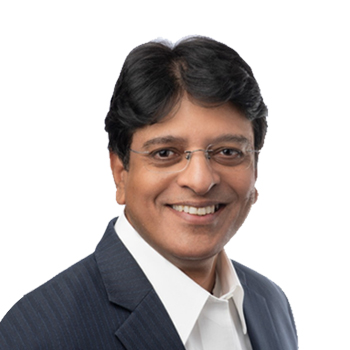
Sheshagiri Anegondi
Managing Partner of Rythium Technologies. Seventeen years at Oracle, from 1998 to 2015, in leadership roles including Vice President Sales, after Compaq and Digital Equipment Corporation.
Author of “Licensing Oracle: The Reference Manual for Managing Oracle License Compliance & Procuring Oracle Software, Hardware, Cloud & Services” (2021, ISBN 10: 1639046887).
See more of our analysis in Google: add Rythium as a preferred source