
The short answer: Oracle’s Java SE Universal Subscription is priced per employee. On its price list of 8 October 2026, a small business with up to 10 employees pays US$100 a year, and a company with 500 employees pays US$10,000. A company with 3,000 employees pays US$378,000 a year, whichever way the Java is used. You can avoid this cost by staying on Oracle JDK 25 under the no-fee terms until September 2028, or by moving to an OpenJDK build.
Why Java cost became a question
The Java ecosystem grew on a free JDK from Sun Microsystems and later a free JDK from Oracle. Oracle now charges for most production use, so a product many teams still think of as free needs a cost decision. Our timeline of the Java license changes shows how we got here.
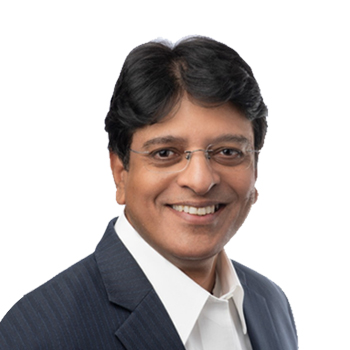 Sheshagiri Anegondi
Java Zero: Pay Zero Additional fees for Java
Java licensing changes do not have to mean new fees. How customers use their contract rights to avoid paying Oracle again for licenses they already own.
Video · 9:14Watch on YouTube
Oracle’s Java SE Universal Subscription price list, 8 October 2026
Since January 2023 Oracle prices Java by the employee, not by processor or Named User Plus. The minimum term is one year.
Small business
| Employees | Price a year (US$) |
|---|---|
| Up to 10 | 100 |
| 11 to 100 | 1,000 |
| 101 to 500 | 10,000 |
| 501 to 2,999 | 10,000 plus 147.20 per employee above 500 |
Enterprise
From 3,000 employees the price is per employee per month, and it falls as the band rises: US$10.50, US$8.25, US$6.75, US$5.70 and US$5.25. For 50,000 employees or more you contact Oracle. Each band also carries a limit on the number of processors that rises from 1,000 up to 50,000.
Oracle’s two worked examples
- 2,999 employees: US$10,000 plus 2,499 employees at US$147.20 is US$377,852.80 a year.
- 3,000 employees: 3,000 employees at US$10.50 a month is US$378,000 a year.
The two prices are almost the same, so company size, not Java use, sets the bill.
Who counts as an employee
Oracle counts full-time, part-time and temporary staff. It also counts the staff of contractors, outsourcers and consultants who support your internal operations. Oracle’s position is that one machine running commercial Java means you pay for every employee. We explain the metric in our guide to the Oracle Java employee metric.
What the choices cost
Customers have four choices:
- Pay what Oracle asks.
- Get visibility of your Java estate and negotiate the amount you believe is right.
- Move to a non-Oracle Java with paid support, which gives you security updates and the latest versions.
- Move to an OpenJDK build.
In one earlier estimate, for a company with 10,000 employees, 200 desktops and 14 servers needing commercial Java, a non-Oracle supported Java cost between US$50,000 and US$150,000 a year. An OpenJDK build had no licence fee. Those figures date from before the 2026 price list and the numbers in your case will differ. Most of our clients need far less than the average.
What a real Java bill came down to
One of our clients, a manufacturer with 8,000 employees, received an Oracle quote on the employee metric: US$1,010,000 a year, for every employee whether or not they had ever used Java. We did not negotiate against the headcount. A scan of the estate found Oracle JDK on 61 servers supporting three applications. Everything else, 92% of the estate, moved to OpenJDK builds, and we negotiated a subscription scoped to the servers that still needed Oracle Java. The demand closed at US$140,000 a year, with no audit and no compliance claim, ten weeks after Oracle’s first letter. The client keeps US$870,000 a year. The figures are in our client case studies.
How to move to zero-cost Java
Stay on Oracle JDK 25 until September 2028
Oracle JDK 25 is free under the Oracle No-Fee Terms and Conditions (NFTC) until September 2028. After that date you need a subscription or a move.
Check your older versions
- JDK 21: updates 21.0.12 and earlier are under the NFTC. From 21.0.13, after September 2026, the Oracle Technology Network (OTN) licence applies and production use needs a subscription.
- JDK 17: updates from 17.0.13, after September 2024, are under the OTN licence.
- JDK 11: all releases are under the OTN licence.
- JDK 8: update 8u211 (April 2019) and later are under the OTN licence.
The OTN licence allows personal use, development, testing, prototyping and demonstrating. Production use needs a subscription. Oracle products that include Java may use that Java for that product only, as we explain in approved product use in Oracle Java.
Move to an OpenJDK build
An OpenJDK build from another vendor is a good option for many companies. You will need to apply security updates regularly. Check that your vendors certify their applications on it. See OpenJDK versus Oracle JDK for the differences.
What customers are doing
We have seen several practical steps:
- RFPs now say that the application must be certified on OpenJDK and non-Oracle Java variants.
- Oracle Java is treated as software that must not be downloaded freely, with the safety level normally used for harmful software.
- Requests to use Oracle Java go up to the CIO and legal counsel, whatever the Java version.
- Some customers look at moving from Java to .NET and other platforms.
- Use of third-party Java runtimes is rising across the board.
Our view
- Oracle has the right to earn money from its products. Java SE is owned by Oracle, and Oracle can charge for its use.
- The questions that follow are what Oracle should charge, and whether the fee should match the value customers get.
Customers should pay for the value they get from the asset they use. The same holds for Java.
What customers should do
Oracle Java will stay popular for some time. Even so, check how you use Java, look at OpenJDK and third-party Java, use the versions Oracle offers at no fee, and keep control of your IT estate.
Oracle JDK 25 is free under the Oracle No-Fee Terms and Conditions until September 2028. JDK 17 updates after September 2024 and JDK 21 updates after September 2026 are not free for production use.
Right away
- Decide whether you need to pay for Oracle Java at all.
- If some deployments need a paid license, decide what amount is fair for them.
- Put controls in place so nobody downloads and installs Oracle Java without approval.
In the medium term
- Decide whether to stay with Oracle Java or move to another platform: non-Oracle Java, OpenJDK or a language other than Java.
How we help
Our Java license review covers:
- Java deployment discovery
- Data normalization and matching to Oracle Java agreements
- Contract and entitlement analysis, for Oracle and third parties
- Reporting
- Negotiation support
The Java License Analyzer is the tool behind it.

Questions we are asked about Java license cost
How much does Oracle Java cost?
Oracle charges per employee: US$100 a year for up to 10 employees, US$10,000 for 101 to 500, and US$378,000 for 3,000 employees. These are Oracle’s list prices of 8 October 2026.
Do we pay for every employee if only a few use Java?
Under the Universal Subscription, yes. Oracle prices by total headcount, including contractors. This is why we first check whether you need a subscription at all.
Can Oracle’s Java price be negotiated?
Yes, when you can show what actually runs. In the case above, a quote of US$1,010,000 a year for 8,000 employees closed at US$140,000 a year once the estate was scanned and most of it moved to OpenJDK.
Is Java free?
Some versions are. JDK 25 is free under the NFTC until September 2028, and OpenJDK builds carry no Oracle fee. JDK 17 updates after September 2024 and JDK 21 updates after September 2026 are not free for production use.
Sheshagiri Anegondi
Managing Partner of Rythium Technologies. Seventeen years at Oracle, from 1998 to 2015, in leadership roles including Vice President Sales, after Compaq and Digital Equipment Corporation.
Author of “Licensing Oracle: The Reference Manual for Managing Oracle License Compliance & Procuring Oracle Software, Hardware, Cloud & Services” (2021, ISBN 10: 1639046887).
See more of our analysis in Google: add Rythium as a preferred source