
Java runs on almost every server and desktop in a large organisation, and Oracle now charges for its version by counting every employee in the company. For many businesses that has turned Java from a background utility into one of their largest Oracle bills, or into an audit claim. Rythium’s Java License Assessment finds where Oracle Java really runs, what you owe for it, and how to bring the cost down, often to zero.
In short
- The licence changed in stages: Free public updates of Java 8 for commercial use ended in January 2019; Oracle’s paid Java SE Subscription followed; since January 2023 it is priced per employee for the whole organisation.
- The free versions expire: Oracle JDK 17 and 21 were released under a no-fee licence, but free updates stopped a year after the next long-term release, in September 2024 and September 2026.
- Our assessment maps every Oracle Java installation and version, separates what is licensed through other products, and shows what you would owe under Oracle’s terms.
- The outcome is a plan to pay less, or nothing, to Oracle for Java, mostly by moving to free OpenJDK builds.
How Oracle Java licensing changed
Until 2019, most businesses used Oracle Java without paying for it. Public updates of Oracle Java SE 8 for commercial use ended in January 2019 with update 202. From April 2019, new updates came under Oracle’s OTN licence, which allows commercial production use only with a paid Java SE Subscription. That subscription was priced per processor for servers and per named user for desktops.
In September 2021, Oracle released JDK 17 under its No-Fee Terms and Conditions, free for commercial use, but only until a year after the next long-term release. Free updates for JDK 17 ended in September 2024, and for JDK 21 in September 2026. Later updates of each are under the OTN licence.
In January 2023, Oracle replaced its Java subscriptions with the Java SE Universal Subscription, priced per employee, from $15 per employee per month at list. The count includes all employees, part-time and temporary staff, and contractors who support the business, whether or not they use Java. A company with 5,000 employees and a few hundred Java installations pays for 5,000. For many of our clients, the employee metric multiplied the price of staying with Oracle Java several times over.
Why internal Java counts fall short
Java hides. It is installed by developers, bundled inside applications, copied onto servers with middleware and carried along in desktop images. Some of those copies are licensed through the product that installed them; most are not. Internal counts usually miss bundled copies, old versions on servers nobody owns and desktops outside the main estate, and they rarely separate Oracle Java from the free OpenJDK builds that look the same. In our experience, the gap between an internal count and ours is often large.
What our Java License Assessment covers
- Discovery: Every Java installation across servers, desktops, virtual machines and cloud, with vendor, version and update level. We give you a dashboard of Java versions and JDKs from every publisher.
- Classification: Which installations are Oracle Java, which are free OpenJDK builds, and which Oracle Java copies are licensed through another Oracle or third-party product.
- Exposure: What Oracle would claim under its current terms, and what you would owe under any older Java subscription you hold.
- Options: Where to remove Java, where to replace Oracle Java with an OpenJDK build such as Eclipse Temurin, Amazon Corretto or Azul Zulu, and where Oracle Java is genuinely needed.
- The plan and the negotiation: A remediation plan, and support with Oracle if a subscription or an audit settlement is still required.
Paying zero to Oracle for Java
For many organisations the realistic goal is to pay Oracle nothing for Java. OpenJDK builds are functionally equivalent to Oracle JDK for almost all applications, and several are free with commercial support available. With every Oracle Java installation found, replaced or confirmed as licensed through another product, and records to show it, there is nothing left to subscribe to. Where an application vendor requires Oracle Java, we check whether that vendor’s licence already covers it.
Real results
- A mid-sized financial services company was facing annual Java license costs of over $500,000 due to its extensive use of Java SE 8 in production environments. After engaging Rythium, the company remediated all potentially non-compliant Java deployments and implemented best practices for Java management, reducing its Java-related expenses to zero.
- A global manufacturing firm was struggling to understand its licensing obligations under Oracle’s new terms. Rythium conducted a comprehensive assessment and identified several areas where the company could optimize its Java usage. By restructuring its deployments and renegotiating its contract with Oracle, the firm was able to reduce its Java license costs by 70%.
Questions we are asked about Java licensing
Is Oracle Java free for commercial use?
Only the current long-term release under Oracle’s no-fee terms, and only until a year after the next long-term release. Older versions need a Java SE Universal Subscription for commercial production use. OpenJDK builds such as Temurin and Corretto are free.
How is Oracle Java priced in 2026?
Per employee, under the Java SE Universal Subscription, for the whole organisation. List prices start at $15 per employee per month and fall with volume.
Do I need to license Java bundled with other software?
Often not. Java bundled inside an Oracle product or a third-party application is frequently licensed through that product, for use with it. Check each vendor’s terms.
What should I do if Oracle contacts us about Java?
Treat it as the start of an audit. Do not confirm deployments or download counts until you have run your own assessment, and route all contact through one person.
Our Java defense and cost reduction work is priced on evidence of your Java footprint, not on your payroll. Talk to us before you reply to Oracle about Java.
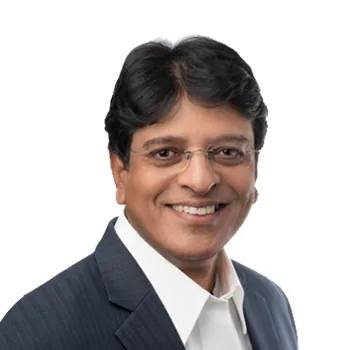
Sheshagiri Anegondi
Managing Partner of Rythium Technologies. Seventeen years at Oracle, from 1998 to 2015, in leadership roles including Vice President Sales, after Compaq and Digital Equipment Corporation.
Author of “Licensing Oracle: The Reference Manual for Managing Oracle License Compliance & Procuring Oracle Software, Hardware, Cloud & Services” (Notion Press, 2021) (ISBN 10: 1639046887).