
100% independent. Rythium takes no fees, commissions or partnerships from any software or AI vendor. Ever.
Home/Oracle License Management

Oracle License Management

Each delivered by the best Oracle licensing expert on the planet.

Oracle licensing consulting, by the hour

Advisor on Call

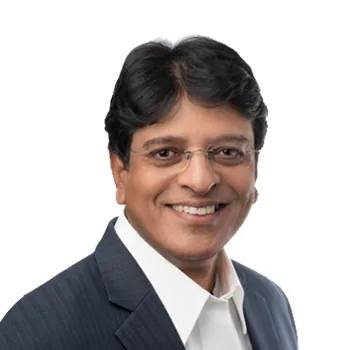
A block of advisory hours with our Managing Partner, Sheshagiri Anegondi, a former Vice-President at Oracle Corporation, reserved for the Oracle questions that arrive without warning and can't wait for a full engagement to be scoped.

Every hour you spend with him is matched by an hour of back-end analysis from our licensing team on your contracts, quotes and deployment data. Half the hours buy the conversation; the other half buy the evidence behind it. You never get an opinion that isn't grounded in your own numbers.
What clients use the hours on

Licensing policyClarifications, explanations, compliance status.

Audit letter triageYour first move, before anything is sent to Oracle.

Quote sanity checksRenewals, Java demands, support quotes, OCI proposals.

Negotiation prepThe session before the account team calls.

Board & CIO briefingsYour real exposure, explained without jargon.

How an engagement runs

Reserve a block

20 or 40 hours, fixed price, scoped in a two-page engagement letter.

Send the question

The quote, letter or contract goes to the analysis team first.

Sit with the advisor

Face-to-face session with prepared positions, not first impressions.

Act on it

Written summary of the position and next moves after every session.

The person advising you is the best Oracle licensing expert on earth.

An Oracle question on your desk this week?Reserve hours
ULA Optimization
Understand ULA Mechanics

ULA Certification with 3-Year Audit Shield

ULA certification is the single highest-stakes event in Oracle licensing: one declaration fixes what you own forever, and any gap in it becomes audit exposure for years. Most advisors help you prepare it and leave. We prepare it, defend it, and then guarantee it.

If Oracle challenges the certified position within three years of exit, through an audit or a compliance claim on the certified estate, Rythium defends it. We can offer this for one reason: we do the certification thoroughly enough to put our own name on it.

If Oracle audits the certified estateWe defend it

If Oracle disputes the certificationWe defend it

Scope and conditions set out plainly in the engagement letter before work begins.

What the engagement covers

Deployment maximizationEvery legitimate deployment counted before the certification clock runs out.

Certification & declarationPrepared to audit standard and managed with Oracle directly.

Clean exitPerpetual rights fixed, support right-sized on the certified estate.

Post-exit baselineA license position document showing exactly what you own.

36 months of coverAny challenge to the certified position is ours to answer.

For companies with a ULA term coming to an end in 4 to 18 months, especially where deployment growth has flattened and the account team is already framing renewal as the "safe" option. The earlier we start, the more deployments we can legitimately count.

ULA ending soon?Start the clock properly
Planning ahead?Avoid ULA mistakes
When Oracle's Java email arrives, or before it does

Oracle Java Licensing: Defense & Cost Reduction

Oracle's Java enforcement starts quietly: an email referencing download records, then a quote priced on the employee metric, every person on your payroll, whether or not they have ever touched Java. Most companies negotiate against that number because they don't know their own. This service makes sure you never have to.

Priced on evidence, not payroll

Oracle's Java model prices your payroll. Our defense prices your footprint.

We build the evidence first, then run the defense: measure where Oracle JDK actually runs, move everything that can move to free alternatives, and close the demand on a footprint you can prove, or eliminate the need for a deal entirely.

−86%off a recent Java demand
10 wksfirst letter to closure, typical

What the defense covers

Usage discoveryEvery Oracle JDK instance, version and application, measured.

Exposure assessmentYour real number under the employee metric and legacy metrics.

Migration strategyOpenJDK and alternative builds for everything that can move.

Negotiation & closureA scoped resolution for only what genuinely must stay on Oracle Java.

Java governanceA policy that stops the footprint silently growing back.

For companies that have received Oracle's Java outreach, and, just as importantly, companies that haven't yet. The defense is strongest when the evidence exists before the email does.

An Oracle Java email in your inbox?Know your real exposure
Oracle audits are not random

Oracle Audit Defense

Oracle audits can be formal, informal, or even casual: a seemingly friendly question from a salesperson about your architecture, an email from Oracle's license management team offering to help you understand Oracle licensing, or a formal notice for audit, which is contractually binding.

We are firm believers in license compliance. But, equally, we are firm believers that a license audit should be investigated in detail, and not accepted without a complete understanding of your contractual rights and obligations. Oracle, like many other publishers, makes a large number of mistakes when it reports audit findings to customers.

Contact us at any stage

Have you received a notice for an Oracle License Audit?

Has an Oracle salesperson hinted at you being non-compliant on license deployment?

Have you run Oracle scripts?

Are you currently in the final stage of a license settlement with Oracle?

Do you believe that there could be a discrepancy in Oracle's findings and need help from an expert?

How we defend an audit

Deployment assessmentAn audit of your deployed Oracle estate, the installation and usage of products and specific features, compared with Oracle's report for accuracy.

Contracts analysisYour OMAs, OLSAs, ordering documents and correspondence, read for your rights and obligations and the exact compliance gap, if any.

Defense strategyThe correct approach and strategy to counter Oracle's claims that may be incorrect.

Lowest bill of materialsThe least you might need to purchase from Oracle to correct any real non-compliance gap.

Communication with OracleData exchanges, meetings, follow-ups and negotiations with Oracle LMS run through our team.

Negotiated outcomeWe negotiate the final outcome, not the initial claim.

Our expertise can help you save 30% to 100% of your potentially claimed exposure.

An Oracle audit letter on your desk?Talk to us before you replyMore on Oracle audit defense
Mergers, acquisitions and divestitures

Oracle Licensing During M&A

During M&A, the largest single IT cost is Oracle.

Managing Oracle licensing in a merger, acquisition or divestiture is complex. Not managing it correctly could end up in potentially the biggest exposure for either the acquirer or a divested entity. We have seen companies cough up upwards of tens (& hundreds) of million dollars in Oracle license fees during M&A.

Oracle licensing should be given the same importance as debt during a M&A due diligence. The time to look is before financial closure, while the licenses, the prices and the contractual terms can still be leveraged to your advantage.

Oracle contracts belong to the legal entity that signed them, and they rarely follow the shape of the deal. For example, in most Oracle ULAs, an acquired company cannot use the ULA products unless you pay extra license and support fees. When a business unit is divested, hardware and device licenses split easily, but Oracle licenses often do not: the contract sits with the parent, and Oracle may not allow the costs to be split.

The questions we answer

What Oracle licenses does the target company own, and is it compliant?

Can the company we acquire use our ULA or our existing licenses?

What happens to our ULA if we are the company being acquired?

How do we split Oracle licenses and support when we divest a business unit?

What will Oracle ask for after the deal closes?

What the engagement covers

Contract reviewThe merger, assignment and entity clauses in your OMAs, ULAs and ordering documents, read for what the deal changes.

Deployment assessmentOracle deployments on both sides of the deal, measured and compared with what each entity is licensed to use.

Risks and savingsCompliance exposure and the cost of fixing it, next to the savings from overlapping licenses and support, ready for the deal model.

Optimization planWhich licenses to combine, move or retire, and an Oracle roadmap for the IT integration or separation.

Post-deal negotiationPreparation for the new and amended agreements Oracle will want, and the negotiation itself.

For buyers and sellers conducting due diligence, and for companies merging or separating their IT after a deal. Come to us before financial closure, while Oracle exposure can still be priced into the deal.

A deal in due diligence?Talk to us before closing
The largest recurring Oracle cost

Oracle Support Cost Reduction

Oracle support can be the highest cost item in the IT budget, and most Oracle customers believe it cannot be negotiated. It can be reduced. It is not an easy task, and we have done it for our clients.

Annual support is 22% of the net license fee, and it rises at each renewal, so by the fifth year you have paid more for support than for the licenses. Dropping the licenses you no longer use often saves nothing: Oracle's support policies reprice the licenses left on the order, and the discount disappears. Every change has to be modelled before anything is sent to Oracle.

The questions we answer

Why does our support bill rise every year when we use less?

Can we stop paying support on licenses we no longer use?

Are we paying Enterprise Edition support for systems that could run on Standard Edition?

Should our stable systems move to third-party support?

When is the right moment to negotiate support with Oracle?

What the engagement covers

Support baselineEvery support contract and CSI, what each one covers, and how much it has grown.

Usage reviewLicenses installed but unused, underused, or on a higher edition than the work needs.

Termination modellingWhich whole orders or license sets can go, tested against Oracle's repricing rules before any letter is sent.

Third-party supportFor stable systems that will not be upgraded: what you keep, what you give up, and what it saves.

Cloud and rewardsWhere OCI spend can be used to pay on-premises support through Oracle Support Rewards, checked against your plans.

NegotiationSupport put on the table when Oracle wants something: a renewal, a cloud commitment or a new purchase.

For companies with an Oracle support renewal in the next 3 to 12 months, or a support bill that has grown while usage has not. The work is strongest before the renewal quote arrives.

A support renewal coming up?Model it before you renew
E-Business Suite, Fusion and other Oracle applications

Oracle Applications Cost Optimization

Uncontrolled license usage is a significant financial risk for Oracle E-Business Suite organizations. EBS is licensed mostly on user metrics, module by module, and with a multiplicity of users, functions and role-based permissions across several instances, usage drifts away from what was bought. EBS also comes with restricted-use database and middleware licenses for running EBS itself, and using them for anything else opens a gap.

Fusion Cloud Applications are subscriptions, so the cost is set by the metrics and quantities you commit to at each renewal. The savings come from matching them to real use before the renewal, and from the terms you negotiate. A move from E-Business Suite to Fusion is also the moment to settle what happens to the licenses and support you already pay for.

The questions we answer

Are we using more EBS users or modules than we bought?

Are cloned and test instances counted correctly?

Is our database and WebLogic use within the rights that came with EBS?

Are we paying for Fusion subscriptions nobody uses?

What happens to our EBS licenses and support if we move to Fusion?

What the engagement covers

Users and modulesApplication users counted the way your contract counts them: end-dated users, roles and responsibilities, and every module in use across all instances.

Technology underneathThe database and application server beneath EBS, checked against the restricted-use rights that came with it.

Support costsUnused modules and users terminated where the support rules allow it, and third-party support for stable releases that will not be upgraded.

Fusion subscriptionsSubscription metrics and quantities matched to real use before each renewal.

Migration planningEBS to Fusion, or to another ERP, with the license, support and contract position settled before you commit.

NegotiationRenewals and new purchases negotiated on your numbers.

For companies running E-Business Suite, Fusion Cloud Applications or both, and for those planning a move from one to the other. The earlier the review, the more of the next renewal it can change.

An applications renewal or audit coming up?Review your applications
2-day intensive training for corporate teams

Oracle Licensing Masterclass

Two intensive days that take your team from utter beginners to confident Oracle licensing practitioners, taught by our Managing Partner, a former Oracle Vice-President, using real contracts, real audit cases and real negotiation transcripts rather than slideware theory.

Some of the biggest companies across the globe have put their SAM, procurement, IT and legal teams through this course. The outcome isn't a certificate on a wall: it's a team that reads an Oracle quote the way we do.

Day 1 · AM

Foundations

License metrics, agreement types, support rules and the policies Oracle treats as contract.

Day 1 · PM

Your contracts

Working session on your own agreements: entitlements, gaps and traps, live.

Day 2 · AM

The hard topics

ULAs, Java, virtualization, cloud/BYOL and how audits actually unfold.

Day 2 · PM

Negotiation lab

Mock renewal and audit-response exercises against Oracle's real playbook.

Duration2 days, intensive

FormatOn-site or virtual

Taught byManaging Partner

Built aroundYour contracts

MaterialsPlaybooks & templates, yours to keep

CohortsSmall enough for every attendee's questions to be about their own estate

SAM and asset managers, procurement and vendor-management teams, IT finance, infrastructure leads and in-house counsel. No prior licensing knowledge assumed on day one; none missing by the end of day two.

Want your team across the table to be this prepared?Book a cohort

Get the best Oracle licensing guru on earth on your side of the table.

Tell us what's on your desk: a quote, a letter, a ULA end date. A senior advisor replies within 48 hours.

Request a confidential conversation
Sheshagiri Anegondi
Sheshagiri AnegondiManaging Partner, Rythium. Former Vice-President, Oracle Corporation.

At Oracle from 1998 to 2015, in leadership roles including Vice President Sales, and before that at Compaq and DEC. Each signature engagement is delivered by him.

WhatsAppChat with an advisor

Cookie settings

Strictly necessaryKeep the site working and remember your cookie choice.
Always on