

Oracle ULA Certification is one of the most challenging processes in Oracle license management. Forced ULA Renewal is another aspect that needs to be understood.
This document aims to provide comprehensive answers to these questions.
What is Oracle ULA Certification?
Oracle ULA Certification and Exit refers to the formal procedure undertaken at the conclusion of an Oracle Unlimited License Agreement (ULA) term. This process involves assessing the number of Oracle licenses that have been deployed, submitting this count as a declaration to Oracle, and securing a certified grant of perpetual licenses.
Frequently Asked Questions by customers of Oracle ULA
In addition to inquiries about the Oracle ULA Certification and Exit process, several other frequently asked questions include:
- Does Oracle seek to certify the ULA?
- What risks are associated with ULA Certification?
- What are the timelines involved in ULA Management?
- What steps should be taken for ULA Renewal or Certification?
Does Oracle want customers to certify the ULA?
Oracle has a vested interest in discouraging customers from certifying their Unlimited License Agreements (ULAs). This stems from several key factors:
- Revenue Generation: Oracle derives substantial revenue from ULA agreements. By complicating the exit process, the company can ensure that customers continue to incur high licensing fees over extended periods.
- Support Fees: Each ULA is associated with an annual support fee linked to the license cost. If customers choose to exit the ULA, Oracle loses the opportunity to collect increased support fees.
- Customer Mobility: Allowing customers to certify their ULA gives them the option to transition away from Oracle in the future.
Due to these motivations, Oracle often makes the certification and exit process from a ULA intricate, filled with obstacles, and potentially costly.
What are Forced ULA Renewals?
A forced Oracle ULA renewal occurs when a customer has no choice but to renew their ULA due to being non-compliant with the license terms. This non-compliance can lead to significant commercial exposure, making it the safer option to renew the ULA at a lower price than the potential non-compliance penalty.
Key points about forced Oracle ULA renewals:
- Non-compliance: The customer has failed to comply with the terms of the ULA, resulting in a license shortfall.
- Commercial Exposure: The non-compliance creates a potentially large financial risk for the customer, as Oracle can demand payment for the license shortfall.
- Renewal as a Safer Choice: To mitigate the commercial exposure, the customer feels compelled to renew the ULA, even if it means accepting a lower price than the full non-compliance penalty.
- Lack of Choice: Due to the non-compliance and associated risks, the customer has limited options and may not be able to exit the ULA or negotiate more favorable terms.
- Perpetuation of Issues: Renewing the ULA without resolving the underlying non-compliance can lead to ongoing compliance problems and financial risks in the future.
To avoid forced renewals, customers should proactively manage their Oracle licenses, ensure compliance, and engage in strategic planning well before the ULA term expires. This approach allows for more flexibility and negotiating power when it comes time to renew or exit the agreement.
Challenges in ULA Certification:
- Non-compliance Risks: Many customers who are non-compliant may choose to renew their ULA to avoid the complexities and costs associated with certification.
- Complex Licensing Structure: Oracle’s licensing framework is notoriously complex, posing challenges even for seasoned IT professionals.
- Contractual Restrictions: Each ULA is tailored to the specific customer, often including various licensing restrictions. Misunderstanding these can lead to significant penalties or forced renewals.
- Audit Procedures: Oracle is known for its rigorous audit processes. Exiting a ULA may trigger an audit to verify compliance, and any findings of non-compliance could result in substantial penalties.
In summary, organizations should approach the ULA certification process with caution and thorough preparation to navigate the complexities and potential pitfalls effectively.
What must be your Oracle ULA End-of-Term Goals
When approaching the end of your Oracle Unlimited License Agreement (ULA), it is essential to establish clear objectives to ensure a smooth transition. Your goals should include:
- Understanding Compliance Position: Gain a comprehensive understanding of your current compliance status regarding Oracle licensing requirements.
- Remediation and Rebalancing: Identify and address any compliance issues, and make necessary adjustments to your licensing strategy to align with your organization’s needs.
- Optimization of Deployments: Evaluate and optimize your Oracle deployments to ensure efficient use of licenses and resources.
- Audit Preparedness: Prepare for potential audits by ensuring all documentation and compliance measures are in place, demonstrating readiness for any scrutiny from Oracle.
By focusing on these goals, you can effectively navigate the end of your ULA and position your organization for future success.
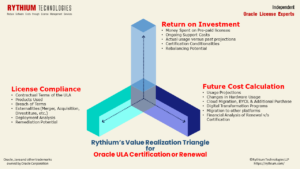

We provide one-time licenses assessments as well as Annual/Bi-Annual Assessment Services. We have helped more than 150 customers certify their Oracle Unlimited License Agreement (ULA).
You might want to read more about our CEO Sheshagiri Anegondi. He is one of the foremost Oracle license experts globally. You can contact him for a deeper understanding of Oracle licensing.
Java is another hugely discussed audit topic in the Oracle world. In case you want to understand the key issues to be considered in choosing between Oracle and non-Oracle Java, you can click here.