
Java Costs Case Study:
An Indian Bank Slashes Java Costs by 85% Through Strategic Optimization
Background
This is the story of how an Indian bank Indian bank slashes java costs.
An Indian financial institution, heavily reliant on Java for its core banking systems, encountered a significant cost increase following a recent change in Java licensing metrics. This resulted in a projected annual subscription cost of $2.7 million. To address this challenge, the bank engaged Rythium, a software licensing consultancy. Rythium’s engagement aimed to:
- Deployment Analysis: Gain a comprehensive understanding of the bank’s Java deployment landscape.
- Usage Optimization: Identify opportunities to optimize Java usage and potentially reduce licensing costs.
- Negotiation Support: Assist the bank in negotiating a more favorable licensing agreement with Oracle.
Tasks in the Engagement
- Discovery:
This phase involves a comprehensive assessment of your organization’s Java usage. This includes:
-
- Identifying all systems (servers and endpoints) and applications utilizing Java technologies.
- Documenting the specific Java versions deployed across different environments (development, test, production).
- Interviewing key stakeholders to understand usage patterns and dependencies.
-
Normalization:
Standardize the data collected during discovery. This ensures consistency and facilitates accurate license calculations. It may include:
-
- Determining the specific Java version(s) being used (e.g., OpenJDK, Oracle JDK)
- Normalizing Java version variations to align with Oracle’s licensing agreements. (BCL, OTN for Java, NFTC)
- Interviewing key stakeholders to understand deployment history and usage patterns.
-
Deployed License Calculation:
- Based on the normalized data, calculate the required Java licenses based on Oracle’s earlier and current licensing model. This may involve:
- Determining the appropriate licensing metric (e.g., processor cores, desktops) for each deployment.
- Calculating the total number of licenses needed across different environments.
- Analysing potential license stacking scenarios with other Oracle products used.
- Analysing license usage for third-party applications.
-
Entitlements of Java:
Evaluate potential entitlement benefits from existing Oracle licenses that may cover some Java usage. This may include:
-
- Identifying overlapping entitlements within Oracle product suites (e.g., WebLogic Server, E-Business Suite, etc.).
- Analysing third-party application licenses that might bundle Java with limited use rights or enlarged usage rights.
-
Optimization:
Develop strategies to reduce the overall Java licensing cost. This may involve:
-
- Identifying opportunities for Java version consolidation or migration to OpenJDK.
- Optimizing deployment configurations to minimize license requirements.
- Evaluating alternative licensing models (e.g., per-user vs. per-core) for a better fit.
- Evaluation of non-Oracle Java usage in lieu of Oracle Java.
-
Price Discovery:
A very crucial phase of the engagement. Rythium worked with the customer and came up with a ‘fair value’ that could be given to Oracle for future usage of Java.
-
Engaging with Oracle for discussing Technical and Commercial Details:
Interact, alongside the customer team, with Oracle to discuss technical and commercial aspects of your Java licensing needs.
-
- Clarifying any ambiguities in Oracle’s licensing terms related to your specific deployment scenario.
- Negotiating more favorable pricing terms based on your findings from the optimization phase.
-
Vetting of Final Oracle Ordering Document:
Meticulously review the final Java licensing agreement presented by Oracle. This critical step ensured:
- All agreed-upon terms pertaining to license type, quantity, pricing, and support are accurately reflected.
- The document clearly outlines any additional fees or potential compliance risks.
- Any ambiguities are addressed before finalizing the agreement.
Final Outcome: A Huge Reduction in Java Costs
On a total cost of ownership, calculated over a 5 year period since our engagement with the client, the cost of subscribing to Java licenses came down by a little more than 85%.
You might want to read more about our CEO Sheshagiri Anegondi. He is one of the foremost Oracle license experts globally. You can contact him for a deeper understanding of the Java Licensing Terminology.
In case you want to understand the key issues to be considered in choosing between Oracle and non-Oracle Java, you can click here.
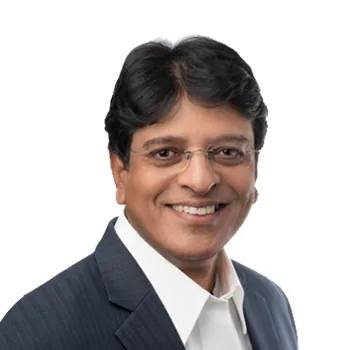
Sheshagiri Anegondi
Managing Partner of Rythium Technologies. Seventeen years at Oracle, from 1998 to 2015, in leadership roles including Vice President Sales, after Compaq and Digital Equipment Corporation.
Author of “Licensing Oracle: The Reference Manual for Managing Oracle License Compliance & Procuring Oracle Software, Hardware, Cloud & Services” (Notion Press, 2021) (ISBN 10: 1639046887).